

Anantnagar Yojana
Anant Nagar Yojna, developed by the Lucknow Development Authority (LDA), is a landmark urban development initiative envisioned to support the planned expansion of Lucknow and meet the growing demand for quality residential spaces. It is spread across approximately 785.02 acres along Mohan Road, and is being developed with a focus on planned infrastructure, connectivity and sustainable urban growth.
Strategically located with access to major routes and emerging urban developments, Anant Nagar Yojna is envisioned as a well-integrated residential destination offering a balanced urban environment. The development includes planned residential areas along with essential civic infrastructure and community-oriented facilities, creating the foundation for a comfortable and well-connected lifestyle.
The scheme has witnessed strong public response across its successive phases. In the 1st Phase, 13,047 registrations were received, with 334 allotments made. The 2nd Phase recorded 8,610 registrations and 332 allotments, while the 3rd Phase received 7,451 registrations, resulting in 636 allotments. In the 4th Phase, 5,211 registrations were received and 540 allotments were made. The 5th Phase received 8,755 registrations, with the allotment process currently pending through lottery.
Through Anant Nagar Yojna, LDA continues to advance its vision of planned, inclusive and future-ready urban development in Lucknow.


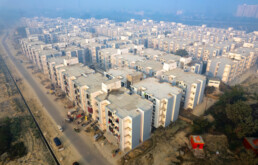
Pradhan Mantri AwasYojana
The Pradhan Mantri Awas Yojana (PMAY) is a flagship initiative of the Government of India aimed at advancing the vision of “Housing for All” by facilitating access to affordable and quality housing for eligible beneficiaries. In alignment with this vision, the Lucknow Development Authority has undertaken the development of affordable housing projects across Lucknow, providing planned residential spaces supported by essential infrastructure and civic amenities.
Under PMAY, LDA has developed affordable housing projects at Sharda Nagar Extension, Sector N, Basant Kunj and Sector I, Basant Kunj, comprising 2,256 units, 2,256 units and 4,656 units, respectively.
The scheme has received encouraging public participation through various phases. PMAY Urban 2023 – 1st Phase recorded 7,771 registrations, with 957 allotments, while the 2nd Phase received 2,002 registrations, with 776 allotments. Basant Kunj, Sector N recorded 2,704 registrations and 200 allotments, whereas Shaheed Nagar Extension received 4,550 registrations, with 207 allotments.
Through these initiatives, LDA continues to contribute towards inclusive, planned and affordable urban housing, strengthening Lucknow’s residential infrastructure while supporting the broader objective of accessible housing for its citizens.


Rashtra Prerna Sthal
RashtraPrernaSthal is a prominent memorial located in Lucknow, Uttar Pradesh, India. It is dedicated to the memory of the freedom fighters and leaders is a symbol of the struggle for independence. The site stands as a reminder of India’s history and its fight for freedom, showcasing the efforts and sacrifices made by various leaders and revolutionaries. RashtraPrernaSthal is designed to honor Sri Ram Prasad Mukherjee ji , PanditDeendayalUpadhyayaji and Sri AtalBihariVajpayeeji who played pivotal role in India’s independence movement and afterwards. It’s a peaceful place for reflection, with well-maintained gardens, open air theatre , multipurpose halls , Helipads , Rally ground , cafeteria , ceremonial gate pathways , parkings flag hosting areas and statues commemorating significant personalities in the Indian freedom struggle.


Construction of residential buildings, shops, and commercial centers, with a special focus on providing housing facilities for economically weaker sections.
Encouraging planned development of the designated development area.
Land acquisition.
Land development.
Construction of residential buildings, shops, and commercial centers, with a special focus on providing housing facilities for economically weaker sections.
Encouraging planned development of the designated development area.
Land acquisition.
Land development.
Development of various land uses as part of the Master Plan.
Management of Nazul land and other properties as per government directives.
Construction, beautification, maintenance, and landscaping of parks.
Development of infrastructure-related facilities.
Construction of residential buildings, shops, and commercial centers, with a special focus on providing housing facilities for economically weaker sections.
Encouraging planned development of the designated development area.
Land acquisition.
Land development.
Encouraging planned development of the designated development area.
Land acquisition.
Land development.
Development of various land uses as part of the Master Plan.
Management of Nazul land and other properties as per government directives.
Construction, beautification, maintenance, and landscaping of parks.
Development of infrastructure-related facilities.
Construction of residential buildings, shops, and commercial centers, with a special focus on providing housing facilities for economically weaker sections.
Encouraging planned development of the designated development area.
Land acquisition.
Land development.
Construction of residential buildings, shops, and commercial centers, with a special focus on providing housing facilities for economically weaker sections.
Encouraging planned development of the designated development area.
Land acquisition.
Land development.
Development of various land uses as part of the Master Plan.
Management of Nazul land and other properties as per government directives.
Construction, beautification, maintenance, and landscaping of parks.
Development of infrastructure-related facilities.

Lucknow Green Corridor Project
A landmark urban infrastructure initiative by the Lucknow Development Authority, integrating seamless mobility, sustainable development and future-ready urban planning.
Lucknow, a city celebrated for its rich heritage, culture and architectural legacy, is steadily emerging as a symbol of modern urban transformation. As the city expands and mobility requirements evolve, the need for efficient transportation infrastructure and well-planned urban connectivity has become increasingly significant. Recognising these emerging needs, the Lucknow Development Authority (LDA) has undertaken an ambitious initiative that addresses present-day traffic challenges while laying a strong foundation for the city’s future growth.
The Green Corridor represents the vision of transformation. Conceived as a major urban infrastructure initiative, it brings together time-efficient mobility, seamless connectivity, environmental responsibility and contemporary urban planning. More than a transportation corridor, it is a strategic development initiative designed to connect neighbourhoods, reduce travel time and unlock new opportunities across city. It reflects a forward looking approach to urban development, where every stretch of road contributes to a more accessible, efficient and progressive city.
Under the leadership of the Hon’ble Prime Minister, Shri Narendra Modi and with the support and guidance of the Hon’ble Chief Minister of Uttar Pradesh, Shri Yogi Adityanath and Hon’ble Defence Minister, Shri Rajnath Singh, the inauguration and dedication of key components of the Green Corridor mark a significant milestone in Lucknow’s development journey.
The project is being developed in four phases, establishing a strategic connectivity network across the city. Phase-I covers the stretch from IIM to Pakka Pul (Daliganj), while Phase-II extends from Daliganj to Samta Mulak Chowk. Phase-III is planned from Samta Mulak Chowk to Shaheed Path, followed by Phase-IV, which will connect Shaheed Path to Kisan Path. Two major phases have been successfully completed and opened to the public, while work on the remaining phases is progressing towards the completion of this extensive infrastructure network.
With a comprehensive development plan and a long-term urban mobility perspective, the Green Corridor is poised to become one of Lucknow’s most significant infrastructure assets.
The first phase of the Green Corridor was developed at an approximate cost of ₹1,700 crore, providing a strong foundation for an improved urban transportation network. The second phase, completed at an approximate cost of ₹299 crore, further strengthened the project’s reach and connectivity. The total estimated cost of the entire project is approximately ₹7,500 crore, reflecting its scale and strategic importance in Lucknow’s infrastructure development.
One of the most significant outcomes of the completed stretches is the substantial reduction in travel time. The journey from IIM, via Pakka Pul (Daliganj), towards Samta Mulak Chowk, which previously involved considerable delays due to traffic congestion, can now be covered in approximately five to seven minutes on the relevant developed stretch. This improvement highlights the corridor’s potential to make everyday commuting faster, more predictable and more convenient.
By reducing travel time and improving traffic movement, the project is helping to create more efficient transportation ecosystem for residents, commuters and businesses alike.
The Green Corridor is designed to integrate several important parts of Lucknow into a stronger and more efficient connectivity network. Areas such as IIM, Basant Kunj, Daliganj, Hazratganj, Gomti Nagar, Nishatganj and Samta Mulak Chowk are among the key locations connected or served by the corridor and its associated road network. Improved connectivity between these locations is expected to ease daily commuting, facilitate smoother movement across the city and enhance accessibility to important residential, commercial and institutional destinations.
The benefits extend beyond shorter travel times. Reduced congestion and smoother traffic flow can also contribute to lower fuel consumption and improved environmental outcomes by limiting unnecessary idling and stop-and-go traffic. Together, these improvements support a more convenient and sustainable urban mobility experience.
A defining feature of the Green Corridor is its integrated approach to infrastructure development. The project incorporates modern six-lane bridges, flyovers, rotaries and railway overbridges to improve traffic distribution and minimise bottlenecks at critical junctions. At the same time, the development approach recognises the importance of preserving and enhancing the urban environment. Tree transplantation and the development of green spaces form part of the broader effort to balance infrastructure expansion with environmental considerations.
Structures developed around areas such as Kukrail and Nishatganj are intended to improve traffic movement while contributing to the visual appeal of the city. This combination of engineering efficiency and urban aesthetics reflects a more comprehensive understanding of modern infrastructure, where functionality and the quality of the surrounding environment go hand in hand.
The implementation of the Green Corridor also demonstrates the importance of technical expertise, careful planning and coordinated project management. One of the key challenges in developing large scale urban infrastructure is ensuring that essential construction activities do not unnecessarily disrupt existing traffic movement. The Lucknow Development Authority has adopted measures aimed at managing this challenge, including construction planning that seeks to minimise traffic disruption, drone surveys for detailed traffic analysis and a scientific approach to rotary design.
These initiatives reflect a systematic and technology enabled approach to infrastructure execution. By integrating technical assessment with on-ground planning, the project seeks to ensure that new infrastructure is developed in a manner that responds to the city’s existing mobility patterns while preparing for future traffic demand.
The upcoming third and fourth phases are expected to extend the project’s reach and strengthen connectivity towards the city’s expanding southern and outer urban areas. The proposed network linking Pipraghat, Shaheed Path and Kisan Path will play an important role in supporting Lucknow’s outward expansion and improving access to emerging development zones.
A key anticipated benefit is improved connectivity to Wellness City and the proposed Naimish Nagar residential scheme. Naimish Nagar is expected to benefit from its connection to the wider network through the IIM intersection, strengthening accessibility to this upcoming urban development. Enhanced connectivity is also expected to support opportunities in healthcare, investment and employment by improving access to emerging residential and economic destinations.
The upcoming phases will incorporate flyovers, loops, embankment roads and multilayered connectivity arrangements to facilitate smoother traffic movement across key junctions. Special emphasis is being placed on carrying out construction along heavily used routes, including Shaheed Path, while seeking to minimise disruption to ongoing traffic.
This approach underlines the importance of balancing infrastructure development with the everyday mobility needs of citizens.
Beyond its transportation benefits, the Green Corridor also incorporates elements that strengthen Lucknow’s cultural and national identity. The model of the indigenous fighter aircraft Tejas, installed at Samta Mulak Chowk, adds a distinctive landmark to the cityscape. The installation celebrates India’s indigenous technological capabilities and serves as a source of inspiration, particularly for young people. It also demonstrates how public infrastructure can extend beyond its functional purpose to create spaces that inspire civic pride, reflect national aspirations and establish a memorable identity for the city.
Through such elements, the Green Corridor brings infrastructure, public spaces and a sense of collective identity, adding a cultural dimension to the city’s ongoing transformation all together.
The Green Corridor initiative also incorporates provisions for sports, fitness and recreational activities, reflecting a broader vision of improving urban liveability. The planned facilities include badminton courts, tennis courts, box cricket, basketball courts, pickleball courts and open gyms. These amenities are intended to encourage citizens to adopt healthier and more active lifestyles while creating opportunities for recreation and community engagement.
By integrating sports and fitness infrastructure into the larger development framework, the initiative recognises that a well-planned city must provide not only efficient transportation but also spaces that contribute to the physical well-being and quality of life of its residents.
Improved connectivity is a key driver of economic development and the Green Corridor is expected to contribute significantly to Lucknow’s evolving economic landscape. Better road infrastructure and reduced travel times can improve access to residential and commercial areas, support business operations and strengthen the movement of people and goods. Enhanced accessibility is also expected to increase the attractiveness of adjoining areas for real estate development, commercial activity and industrial investment. As connectivity improves, emerging urban zones may benefit from greater investor interest, creating opportunities for economic expansion and employment generation.
The project therefore represents more than an investment in transportation infrastructure. It is a strategic step towards strengthening the city’s economic ecosystem and supporting its long-term development potential.
The Green Corridor has emerged as a defining initiative in Lucknow’s urban development journey. By bringing together strategic planning, modern engineering, improved mobility, environmental considerations and public-oriented amenities, the project reflects a comprehensive vision for the city’s future. Its significance lies not merely in the roads and structures being developed, but in the opportunities that improved connectivity can create for citizens, businesses and emerging urban centres. From reducing commuting time to enhancing accessibility, supporting investment and encouraging active living, the initiative is designed to deliver benefits that extend across multiple dimensions of urban life
Green Corridor – Accelerating Mobility, Connecting Opportunities and Paving the Way for a Future-Ready Lucknow.


